Democratic Republic of Congo, Kiwanja, 11 June 2014
In according to the Country programme the school feeding programme will be implemented in rural areas to narrow the gap in access to primary education between urban and rural areas. The main anticipated outcomes are: i) improved access to primary education, school retention rates and learning capacity; ii) strengthened national capacities in school feeding management; iii) links between school feeding and local agricultural production; and iv) improvements in schoolchildren’s long-term nutrition status. Over four years 132,500 students will be targeted – 50 percent girls and 12 percent indigenous23 – in more than 800 primary schools designated by the Ministry of Education in eight priority rural departments.24 WFP will ensure gender balance in the school feeding management committees to avoid excessive burdens for women. The Government has prioritized food fortification to address micronutrient deficiencies nationwide. WFP is positioned as a technical partner and will support the scale up of a pilot project on cassava flour enrichment with a view to marketing the product nationwide. To support production, WFP will initially buy flour as part of local procurement25 for school feeding.
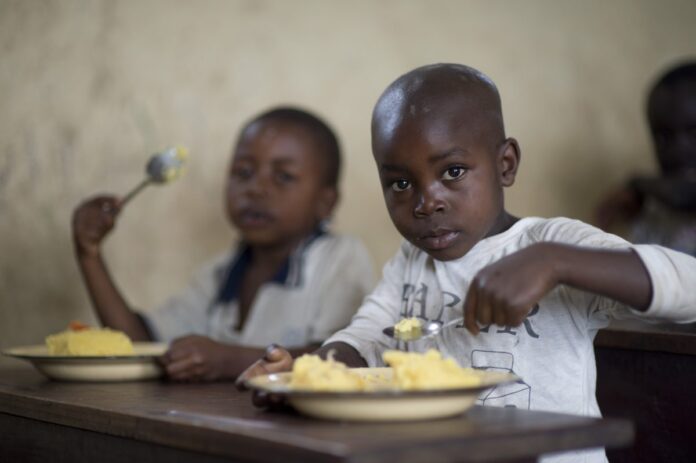
In the photo: Child eating in his classroom.
Photo: WFP/Rein Skullerud